Zinc oxide contributes to protective coatings through opacity, UV resistance and antifungal properties. Dr. Zinc explores its role in architectural and marine coatings and why particle size, purity and consistency matter.
One compound, two very different environments
A painted building façade and a ship's hull may seem to have little in common.
One spends its life exposed to sunlight, humidity and changing weather conditions. The other operates below the waterline, continuously exposed to seawater and biological growth.
Yet zinc oxide has a role in coatings designed for both.
Its history in paint stretches back well over a century, initially because of its whiteness and opacity. Today, its role extends far beyond appearance.
In Episode 03 of Ask Dr. Zinc, we explore how zinc oxide contributes to architectural and marine coatings, from UV resistance and antifungal properties to its role in antifouling formulations.
Where zinc oxide's role in coatings began
Zinc oxide's earliest and most enduring use in coatings comes from its optical properties.
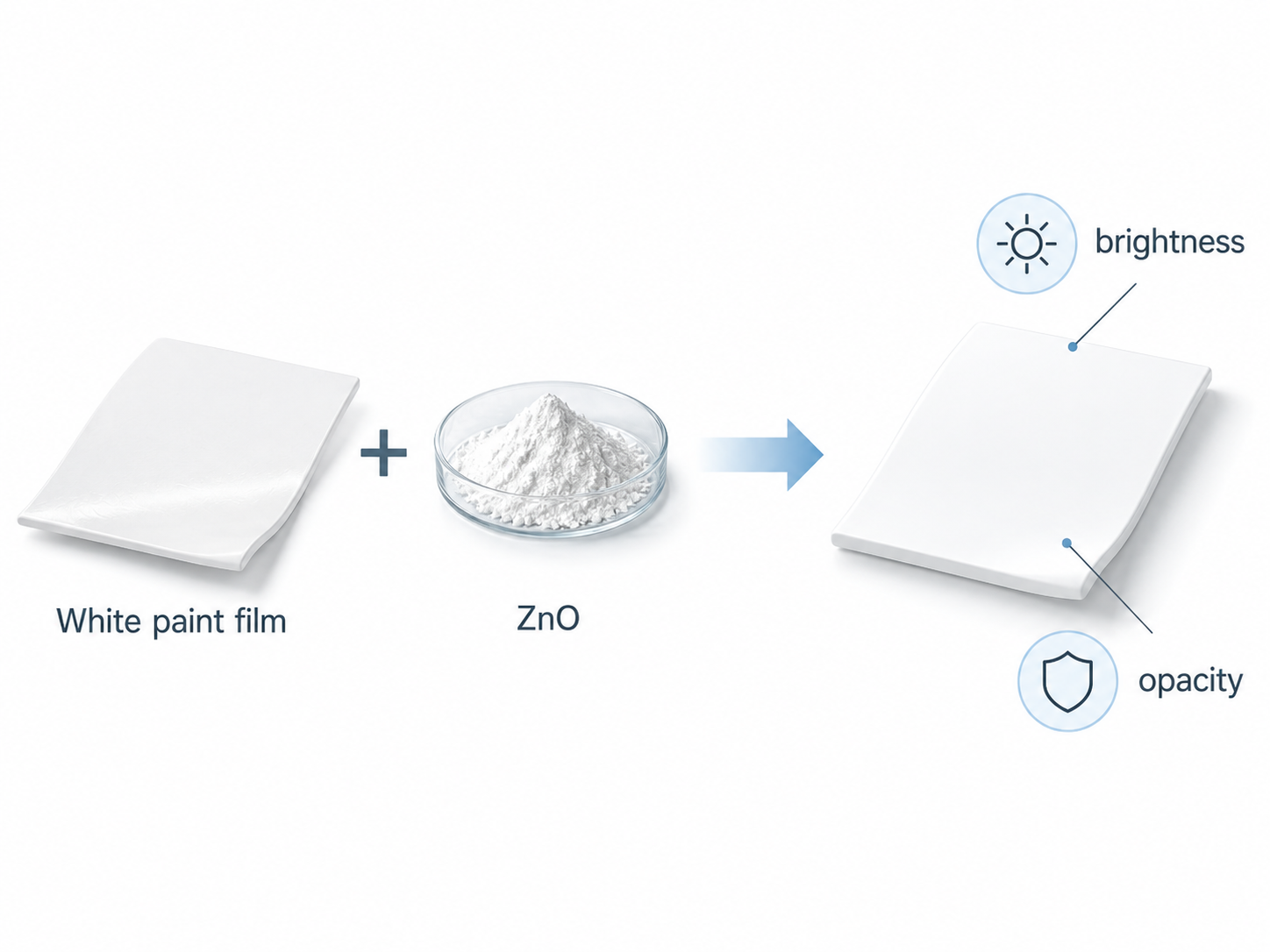
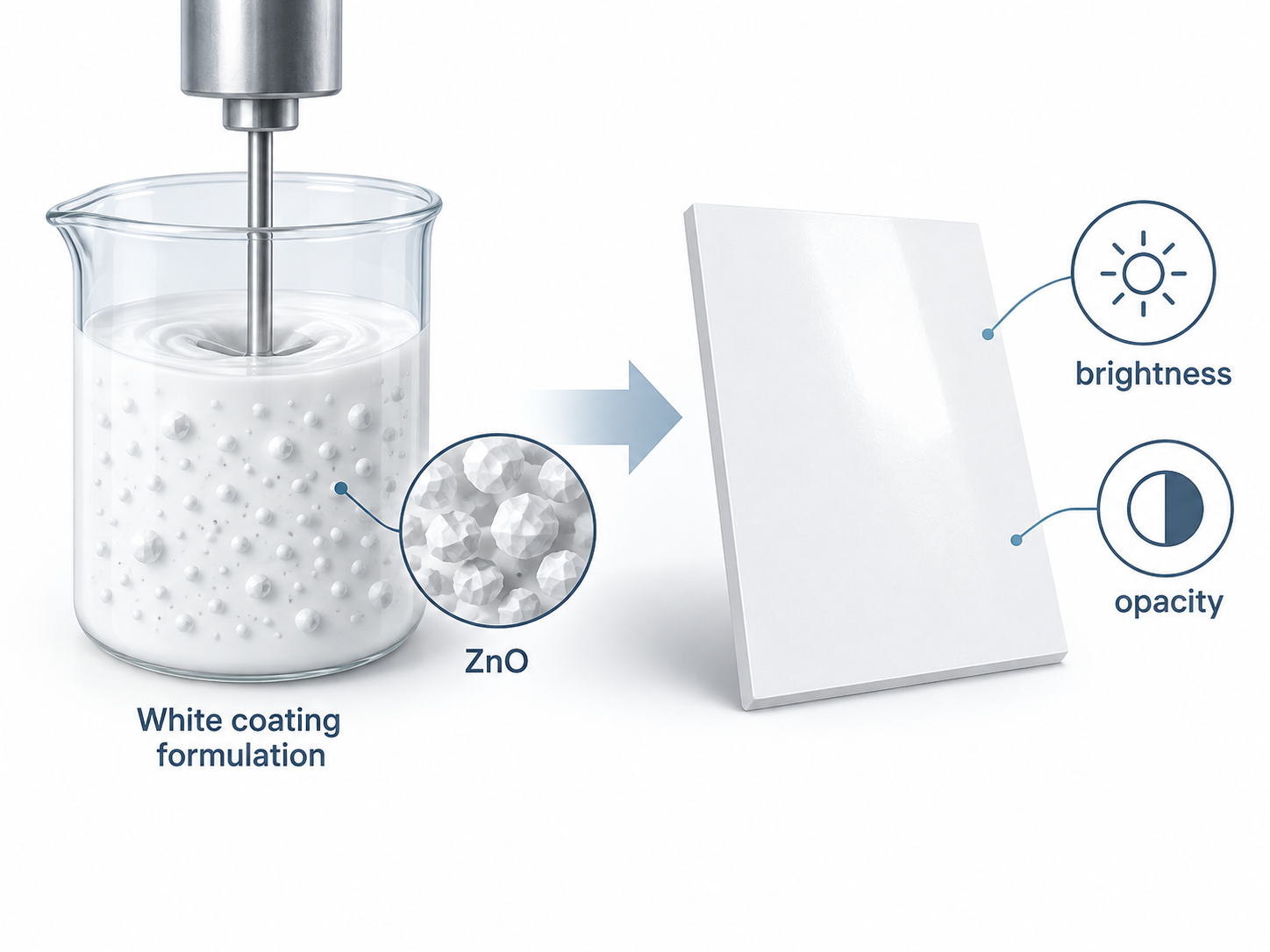
As a white pigment, zinc oxide contributes brightness and opacity to paint formulations.
Historically, it served as an alternative to lead-based white pigments before those pigments were phased out because of toxicity concerns.
Today, zinc oxide is more commonly used as a functional additive alongside primary white pigments such as titanium dioxide, contributing to the overall properties of the coating film rather than acting as the sole whitening agent.
Protecting the coating from UV exposure
One of zinc oxide's most valuable properties in outdoor coatings is its UV resistance.
As a semiconductor material with a wide band gap, zinc oxide absorbs ultraviolet radiation efficiently and converts it to lower-energy forms rather than allowing that radiation to degrade the coating's polymer binder.
This matters because prolonged UV exposure can contribute to photo-oxidation of the binder.
Over time, that degradation can lead to:
- Chalking ;
- Fading ;
- Cracking ;
- Eventual loss of adhesion.
By absorbing UV radiation before it reaches and degrades the binder, zinc oxide helps extend the functional lifespan of the coating and supports longer-lasting protective and aesthetic performance.
“Zinc oxide helps protect the coating itself by absorbing UV radiation before it can degrade the polymer binder.”
— Dr. Zinc
Another challenge: biological growth
Weather is not the only challenge for architectural coatings.
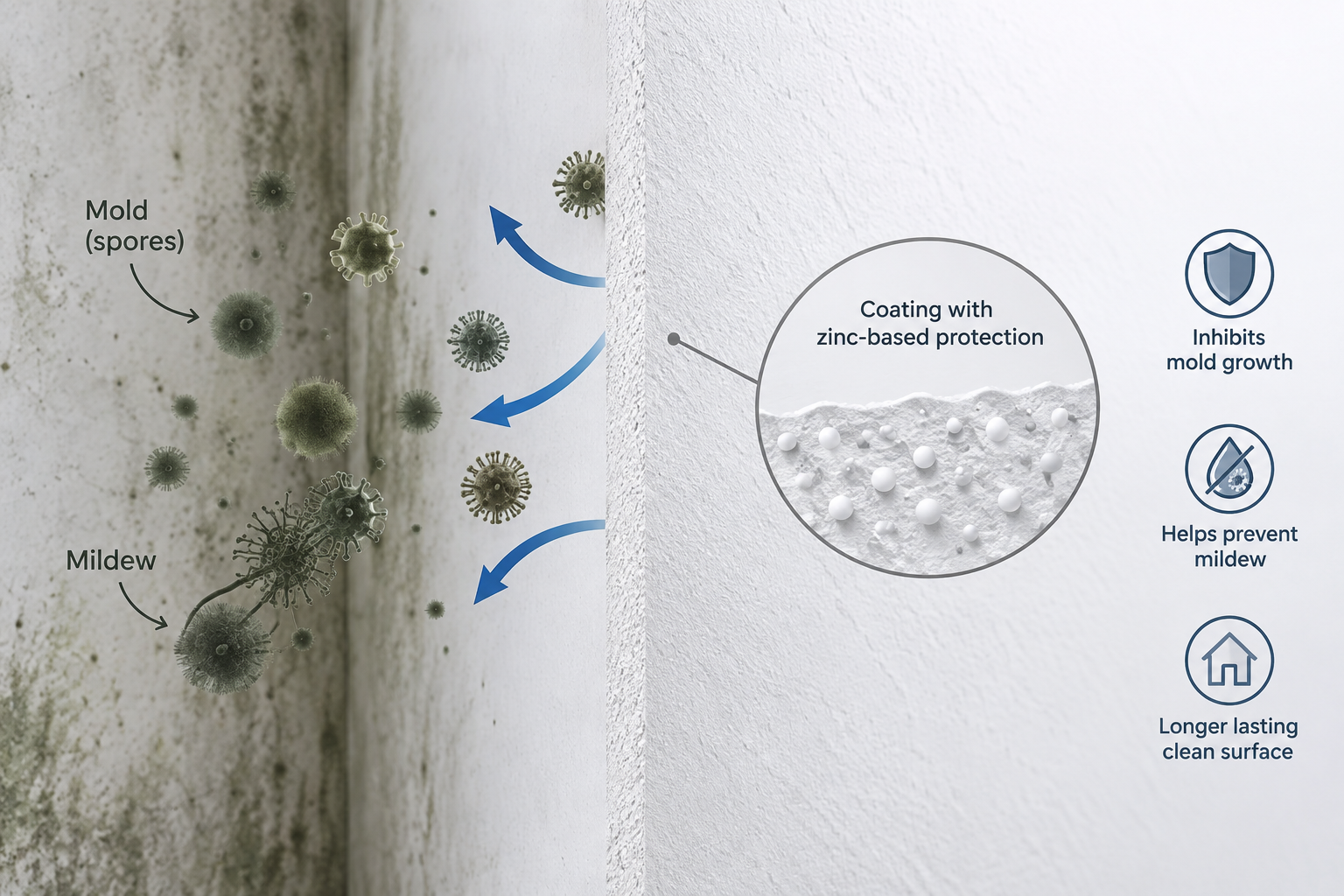
Painted exterior surfaces can also be colonized by mold, mildew and algae, particularly in humid climates or shaded, moisture-prone areas.
This growth is not only an aesthetic issue. Left unchecked, it can degrade the coating film and, in some cases, contribute to damage of the underlying substrate.
Zinc oxide helps inhibit mold and mildew growth on coated surfaces.
This biological resistance is one reason zinc oxide remains a trusted additive in architectural exterior coatings where fungal growth is a persistent maintenance challenge.
From a building façade to a ship's hull
The same biologically inhibitive properties also matter in an entirely different environment.
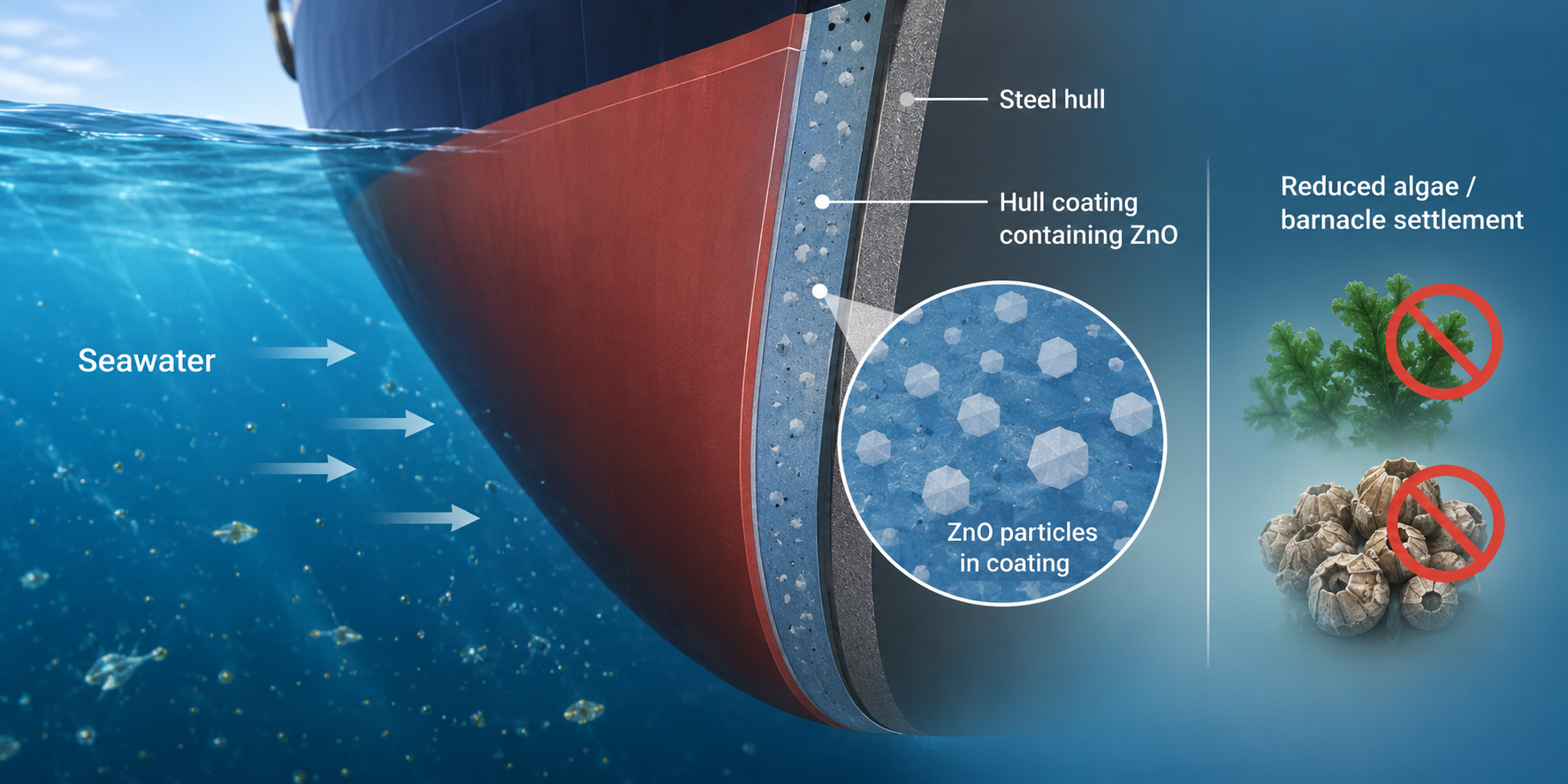
Ship hulls are continuously exposed to seawater, where algae, barnacles and other marine organisms can attach and accumulate.
This process is known as biofouling.
Biofouling increases surface roughness and hydrodynamic drag. In turn, this can increase fuel consumption and lead to more frequent hull cleaning or dry-docking.
Zinc oxide is used as an additive in antifouling and protective marine coatings, where it helps inhibit the settlement and growth of algae and barnacles on the hull surface.
By contributing to lower biofouling, zinc oxide can therefore support lower drag, improved fuel efficiency and reduced maintenance frequency over a vessel's operating life.
More than a century of coatings performance
Zinc oxide's use in coatings is not recent.
Its continued presence across more than a century of architectural coatings has accompanied major changes in binder chemistry, including the move from oil-based systems to latex and acrylic formulations.
The fact that zinc oxide has continued to serve functional roles through these changes reflects its ability to deliver value across evolving coating technologies.
Those functional properties also extend into marine coatings, where surfaces face continuous water exposure and biological pressure.
Fore more zinc-based corrosion protection, explore how Fine Zinc Powder helps protect steel in Episode 01 of Ask Dr. Zinc.
The zinc oxide grade matters too
The functional requirements of a coating also influence the zinc oxide grade formulators need.
Three characteristics are especially important.
Particle size and surface area
These affect UV absorption efficiency, opacity and dispersion within the coating matrix.
Purity
High purity helps avoid impurities that could affect film formation, color stability or long-term durability.
Discover EverZinc's range of zinc oxide grades and their technical characteristics.
Consistency across batches
Coatings manufacturers rely on consistent material characteristics to maintain tight formulation specifications and predictable field performance.
Architectural-grade and marine-grade zinc oxide are formulated to different specifications according to the exposure conditions and performance requirements of the final application.

EverZinc zinc oxide for coatings
At EverZinc, we produce zinc oxide engineered for coatings applications across architectural, industrial and marine markets.
These grades deliver the opacity, UV resistance that formulators depend on to protect surfaces, extend coating lifespan and reduce long-term maintenance costs.
FAQ: zinc oxide and protective coatings
Zinc oxide is used in coatings for functions including opacity, UV resistance, across architectural, industrial and marine applications.
Yes. Zinc oxide contributes brightness and opacity to paint formulations and is today commonly used as a functional additive alongside primary white pigments such as titanium dioxide.
Zinc oxide absorbs ultraviolet radiation efficiently, helping prevent UV energy from degrading the coating's polymer binder.
UV-driven photo-oxidation can lead to chalking, fading, cracking and eventual loss of adhesion.
Zinc oxide is used as an additive in antifouling and protective marine coatings, where it helps inhibit the settlement and growth of algae and barnacles.
Biofouling increases hull surface roughness and hydrodynamic drag, which can contribute to higher fuel consumption and more frequent cleaning or dry-docking.
Particle size and surface area affect UV absorption efficiency, opacity and dispersion of zinc oxide within the coating matrix.
Purity helps limit impurities that could affect film formation, color stability or long-term durability, while batch consistency supports predictable coating performance.
EverZinc produces zinc oxide engineered for architectural, industrial and marine coatings, delivering opacity, UV resistance and antifungal performance.
From façade to hull: one material, different functions
Zinc oxide's role in coatings is not defined by a single property.
In architectural coatings, it contributes to whiteness and opacity, helps protect the coating from UV-driven degradation, and supports resistance to mold and mildew growth.
In marine coatings, its biologically inhibitive properties also help limit the settlement and growth of algae and barnacles on hull surfaces.
These are very different exposure conditions, but they illustrate the same principle: the performance of a coating depends not only on how it looks when first applied, but on how its formulation responds to the environment over time.
More than a century after zinc oxide first became part of paint formulations, its role has expanded from its historical use as a white pigment to that of a functional additive across architectural, industrial and marine coatings.