Zinc oxide is widely used in diaper creams as a physical skin protectant. Dr. Zinc explains its semi-occlusive barrier function, safety profile, and why purity, particle size and batch consistency matter.
Protection where formulation quality matters most
Products designed for infant skin place particularly high demands on formulation quality and safety.
Diaper creams and barrier ointments are applied to some of the most sensitive skin there is. Caregivers expect them to provide effective protection while also meeting demanding safety requirements.
Zinc oxide has held an important place in these formulations for generations because of a particular combination of physical and biological properties.
In Episode 03 of Ask Dr. Zinc, we look at how zinc oxide functions in diaper creams and skin-protectant formulations, how its semi-occlusive barrier works, and why purity, particle size and consistency matter when formulating for sensitive skin.
Why does skin in the diaper area need a protective barrier?
Diaper dermatitis, more commonly known as diaper rash, develops when skin is exposed for prolonged periods to moisture, friction and contact with urine and feces.
Protecting the skin therefore starts by limiting contact between the skin surface and those irritants.
But the characteristics of the barrier itself matter.
A barrier that is fully occlusive can trap moisture against the skin. The zinc oxide barrier described in skin-protectant formulations works differently.
How does zinc oxide form a semi-occlusive physical barrier?
Zinc oxide works as a physical rather than chemical skin protectant.
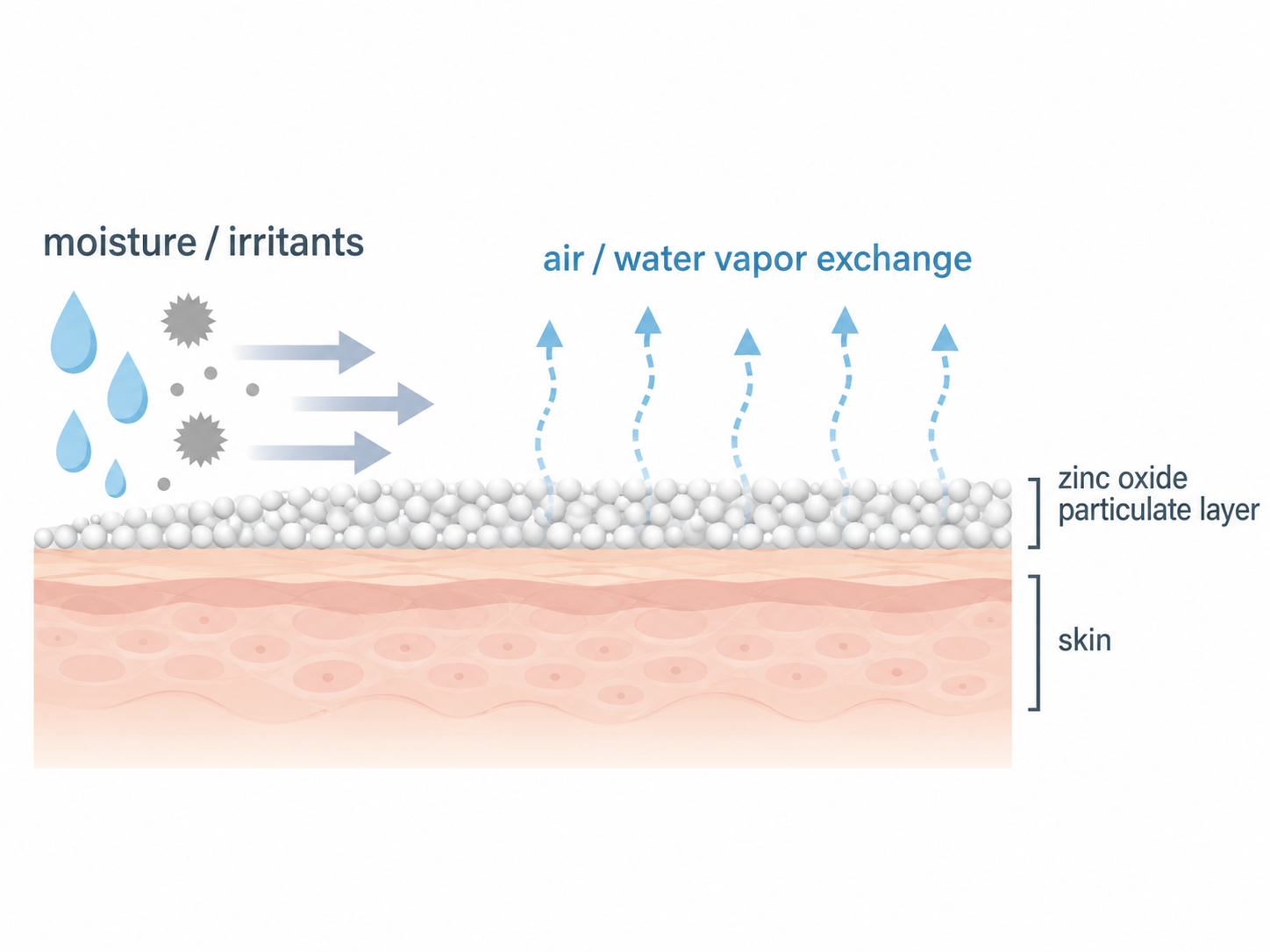
When applied topically, its fine particles form a semi-occlusive layer on the surface of the skin.
This layer performs two complementary functions.
1. Blocking moisture and irritants
The barrier helps prevent urine, enzymes from stool and external moisture from reaching and irritating the skin.
2. Preserving some breathability
Because of its particulate structure, the zinc oxide layer still allows some air and water vapor exchange.
This helps maintain a healthier skin microenvironment underneath the protective layer.
It is this combination, limiting exposure to moisture and irritants without creating a completely occlusive barrier, that distinguishes zinc oxide's role in these formulations.
“Zinc oxide forms a semi-occlusive physical layer that helps keep moisture and irritants away from the skin while still allowing some air and water vapor exchange.”
— Dr. Zinc
Beyond the barrier: skin physiology
Zinc oxide also brings a biological dimension to skin-protectant formulations.
It helps to maintain a healthy skin.
This is relevant in the context of diaper rash because irritated or mildly broken skin can be more vulnerable to secondary microbial infection.
Zinc also has a recognized role in skin physiology more broadly.
It acts as a cofactor for numerous enzymes involved in tissue repair and epithelial regeneration, which is part of why zinc-based compounds are associated with supporting the skin's own healing processes rather than simply masking symptoms.
Why does the safety profile matter in infant skincare?
Infant skincare places a particularly high safety requirement on formulators.
With young children, accidental ingestion of small quantities during normal use is a realistic consideration. Zinc oxide's safety profile is therefore an important part of its appeal in this application.
Combined with its long history of clinical use, this safety margin is one of the reasons zinc oxide has remained a reference active ingredient in skin-protectant formulations across generations.
Why do zinc oxide purity and particle size matter?
Not every zinc oxide grade is appropriate for infant skincare.
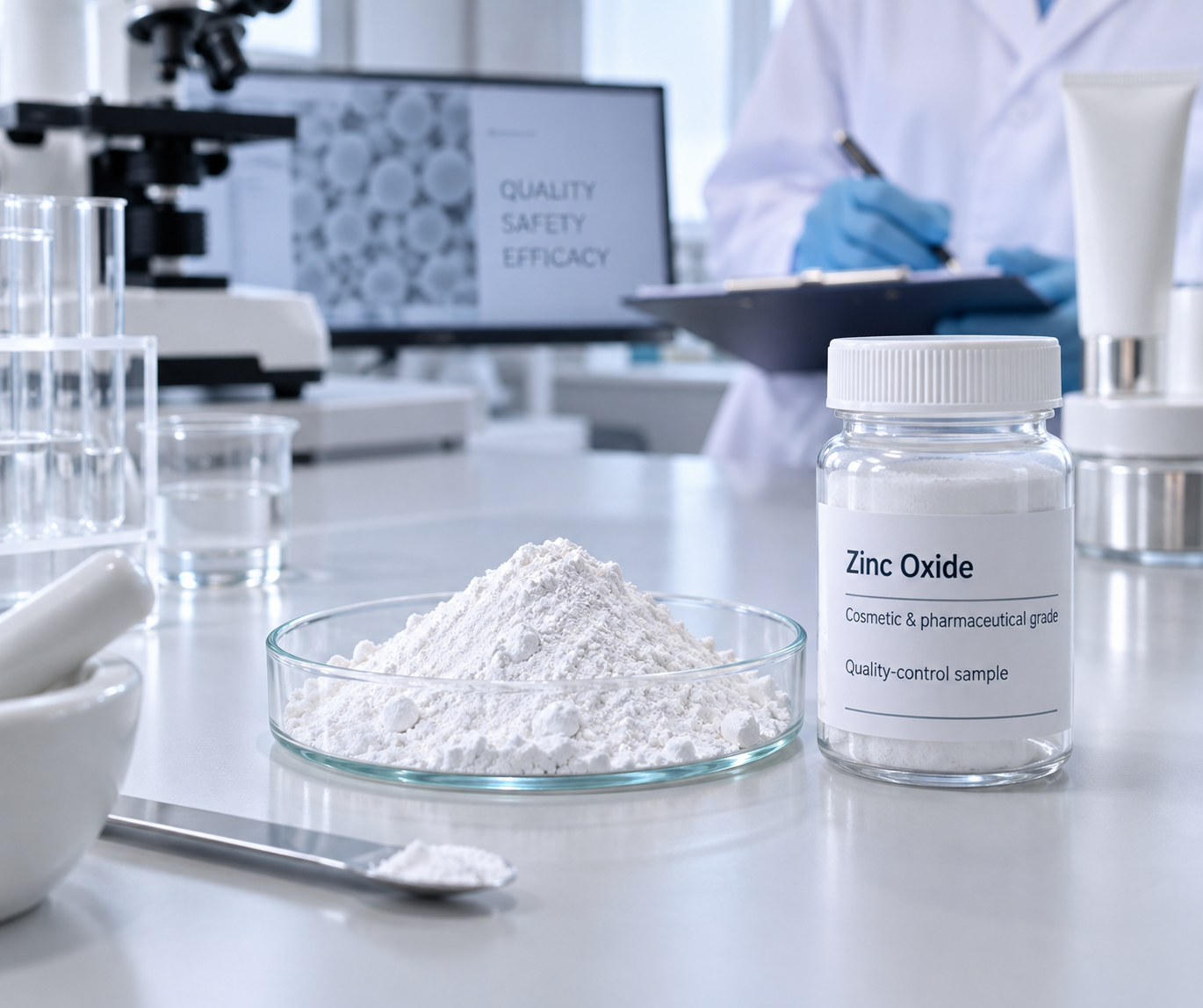
Formulators working with diaper creams, barrier ointments and related sensitive-skin products require material with characteristics tailored specifically to cosmetic and pharmaceutical applications.
Three characteristics are particularly important.
High purity
High purity helps minimize trace impurities that could affect skin tolerance, an especially important consideration given the sensitivity of the end user.
Controlled, fine particle size
Particle size influences the smoothness and spreadability of the finished cream as well as how effectively the barrier layer forms on the skin.
Consistent quality from batch to batch
Infant and pharmaceutical-grade products operate within regulatory frameworks requiring tight and reproducible specifications.
These requirements distinguish cosmetic and pharmaceutical-grade zinc oxide from material intended for industrial uses.
A zinc oxide grade designed to act as a rubber activator or for use in water treatment does not require the same purity and particle characteristics as a material intended for a product applied repeatedly to newborn skin.
Discover EverZinc's range of zinc oxide grades and their technical characteristics.
A compound trusted across generations
Zinc oxide's role in skin-protectant formulations is not recent.
Its use predates modern pharmaceutical regulation by decades and has continued as standards governing the safety and efficacy of infant products have become increasingly rigorous.
That long history is particularly notable in a personal-care market where new ingredients and formulations continue to emerge.
Zinc oxide has remained an established reference in the category while the requirements surrounding infant products have evolved.
EverZinc zinc oxide for sensitive-skin applications
At EverZinc, we produce cosmetic and pharmaceutical-grade zinc oxide engineered for the purity, fine particle size and skin compatibility that formulators need.
These grades are designed for applications including:
- Diaper creams ;
- Barrier ointments ;
- Other sensitive-skin formulations.
By controlling the material characteristics that matter to formulators, EverZinc supports product performance from the first application.
Through the Ask Dr. Zinc Knowledge Series, EverZinc connects the properties of zinc-based materials with the applications in which those properties matter.
All information, data, and know-how presented herein are proprietary to EverZinc. Customers are responsible for validating suitability, performance, and regulatory compliance for their specific applications. EverZinc assumes no liability arising from the use of this information and provides no express or implied warranties.
Learn more about EverZinc zinc oxide solutions for cosmetic and pharmaceutical applications
FAQ: zinc oxide and diaper creams
Zinc oxide works as a physical skin protectant. Its fine particles form a semi-occlusive layer on the skin that helps block moisture and irritants while still allowing some air and water vapor exchange.
In diaper-cream applications, zinc oxide is described as a physical rather than chemical skin protectant. Its particles remain at the skin surface and form the protective layer.
A semi-occlusive barrier limits contact with moisture and irritants without completely sealing the skin surface. The particulate zinc oxide layer allows some air and water vapor exchange.
Zinc acts as a cofactor for numerous enzymes involved in tissue repair and epithelial regeneration. This is one reason zinc-based compounds are associated with supporting the skin's own healing processes.
Controlled, fine particle size affects the smoothness and spreadability of the finished cream and how effectively the protective barrier layer forms on the skin.
High purity helps minimize trace impurities that could affect skin tolerance, which is particularly important for products intended for sensitive infant skin.
No. Cosmetic and pharmaceutical-grade zinc oxide is manufactured to different specifications from industrial grades. The purity and particle characteristics required for applications such as rubber activation or water treatment are not the same as those required for products intended for newborn skin.
EverZinc produces cosmetic and pharmaceutical-grade zinc oxide, GMP and API certified, engineered for purity, fine particle size and skin compatibility, for applications including diaper creams, barrier ointments and other sensitive-skin formulations.
What should Dr. Zinc explain next?
This episode explored how zinc oxide functions as a semi-occlusive physical skin protectant in diaper creams, how it helps block moisture and irritants while preserving some air and water vapor exchange, and why safety profile and formulation quality matter in sensitive-skin applications.
Have a question about zinc oxide, zinc powder, or their industrial and personal care applications?
Submit your question to Dr. Zinc. It may be featured in a future Ask Dr. Zinc Knowledge Series article.